http://hexus.net/tech/news/storage/94762-besang-incs-3d-super-nand-costs-just... 3-D Memory Wars Yup, Intel & Micron have their 3-D XPoint memory pony sitting out in the starting gate, Samsung and Qualcomm are each working on their separate ideas, but keeping mum about the details .....
..... and now here comes a Far Eastern/India upstart company named Besang with a gate all around idea that is 10 times faster, 10 times more energy efficient, litho shrinks MUCH better -- has 10 times more memory density per chip and per wafer (more memory per chip) AND MOST KILLINGLY is 10 times cheaper to build per wafer on any given litho level. .... 2 cents a gigabyte .... so watch Besang get bought up ASAP by somebody just to shut them up or else maybe to use their technology competitively against Intel.Look to see the Memory Wars heat up real real soon, look to see folks license the Besang gate all around 3-D memory tech and run hard with it .....
http://hexus.net/tech/news/storage/94762-besang-incs-3d-super-nand-costs-just...PREDICTION TIME:Gate all around tech at 5nm and 3nm lithography is coming real soon. Besang has identified the high value technological driver that can speed this gate style "adoption" at reduced lithography levels along quite nicely.
A new electron laser production line can be bought for memory production, set up to do gate all around Besang style non-volitile memory, turned on and let run for year on year until completely paid for (5 to 10 times over no less) by the initial memory profits --- then you got yourself a freebie used 5nm or 3nm electron laser line to put to work doing something else useful.Basic structure and definition of a PC system will shift drastically to optimize the use of large amounts of "pooled" fast non-volatile 3-D memory. So will OS and app functions.
Existing retrofit solutions for Old Stuff may be better expressed as thicker double sided Ram modules, with a sizable chunk of 3-D new type memory that is fronted with some very very fast Dynamic Ram which is just acting as a throughput translation buffer to the old style memory bus.
Time to replace your old PC may arrive fairly soon due to this wave of memory innovation,
but not until competition drives the price way way down out of the "sky high pricing level" where it resides today.
Besang is selling non-volatile production memory chipsets in planned sizes going all the way up to a TERABYTE per stacked chipset on the big end of their range. This tech will upend and disrupt the main DRAM memory industry and SSD memory and jump drive memory and the platter hard drive industries
all within the next 2 years.
Watch Besang sell a whole lot of production lines and license a whole lot of their tech inside the next six months. When this stuff moves into phones, the whole Phone PC idea will become very very real and quite practical.
========================================
Having gotten a real Justin style
"I'm melting ...." mop water bath over what they have released so far (as far as a VERY under performing very expensive
($1,520) full Optane hard drive goes) --- Intel recants and comes out with usage recommendations for a $44 to $77 SSD style Optane
buffer drive which will go on top of a standard hard drive installation.
(if you have the slot that is .... and meet all the requirements listed below)  Starting April 24th, you’ll be able to buy a 16GB module for $44 or a 32GB module for $77.
Both are M.2 PCIe 3.0 drives that use the 3D Xpoint technology Intel developed together with Micron. And both offer read and write speeds that far surpass what you’d typically expect from NAND flash, although the 32GB drive is faster than the 16GB module.
Odds are that most computer users will want more than 32GB of storage, but throw these SSDs into a system that already has a large hard drive and you get some of the best of both worlds: plenty of speedy storage for currently running applications, and plenty of storage for media, documents, and other files.
Intel doesn’t officially support installing Windows to an Optane drive yet. Instead the idea is to use these drives as cache storage. Intel Rapid Storage Technology will let your computer treat a hard drive and Optane drive as if they were a single drive… but use the faster drive for data caching purposes, which should speed up a lot of operations.
While you could also use an Optane SSD to boost performance of a NAND flash SSD, the difference won’t be as noticeable as when used with a hard drive, since SSDs already tend to be faster than HDDs.
Although performance will likely vary depending on a variety of conditions, Intel says its Optane memory could:
Cut the time it takes to boot a PC in half
Increase storage performance as much as 14x
Launch applications faster (for instance, Outlook is said to load up to 5.8x faster)
Find files on your PC up to 4x faster
Hoping to speed up an old PC with a new Optane drive? Then you’ll probably need to buy a new motherboard and processor to go with it.
In order to be Optane-ready, a computer needs an Intel Kaby Lake chip, windows 10 64-bit software, an M.2 2280 slot with two or four PCIe data lanes, and a BIOS that supports the Rapid Storage Technology 15.5 drive.
Intel has a list of compatible boards soon to be available.Here's what's amusing ..... plug in a plain old standard fast SSD drive into that same slot and you get pretty close to these same benefit levels.
Intel tends to speak with a brown vaporous forked tongue a whole lot lately, in a somewhat vain attempt to keep their stock price up as much as possible.BUT WAIT A SECOND ..... when the new Optane motherboard and Optane bus and Optane slots and Optane BIOS rewrites and all of the new unified faster COMPLETE PC OPTANE MOTHERBOARD PACKAGE is finally out (and MS has to rewrite Win10 yet again) then Intel/Micron/Optane will do better. Honest Injun, it will.

So much so that Intel can mebbe possibly excuse their staying stuck at 14nm lithography for yet another year or so and supposedly still say they are kinda sorta a competitive product ....
 yeah, you betcha
Intel, Besang is taking production orders for their already existing up and running lines RIGHT NOW ...... and they are licensing the tech directly to others and are even selling fully set up and tuned production lines, right now.
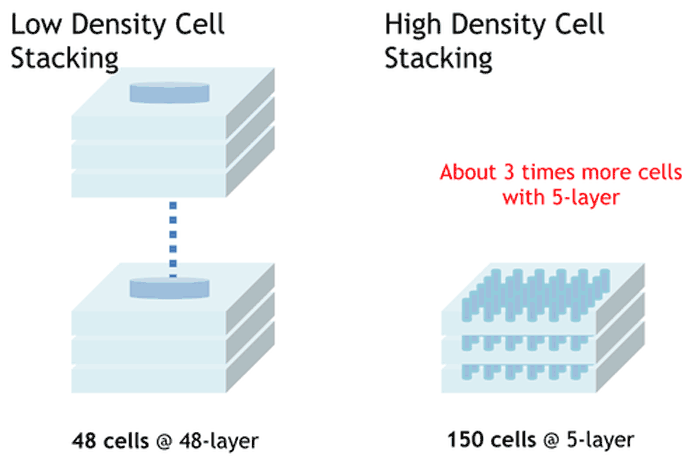
...... and yes, Intel, that is your brand new non-competitive 14nm stuff shown over on the left in the pic below.


 Pages: